
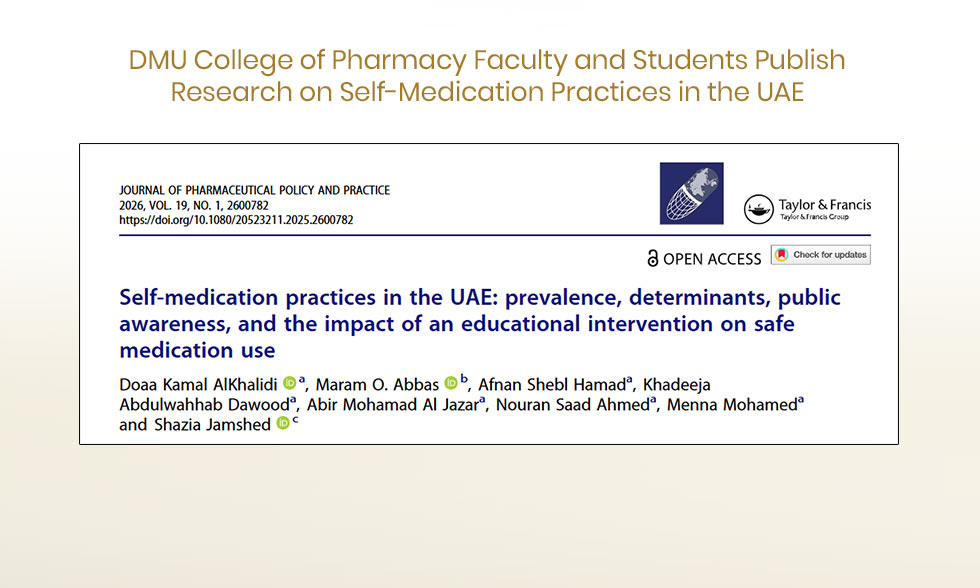
The College of Pharmacy at Dubai Medical University (DMU) announces the publication of a peer-reviewed research article titled “Self-Medication Practices in the UAE: Prevalence, Determinants, Public Awareness, and the Impact of an Educational Intervention on Safe Medication Use,” in the Journal of Pharmaceutical Policy and Practice (Taylor & Francis). The article is freely accessible open access via PubMed Central (DOI: 10.1080/20523211.2025.2600782).
The study was led by Dr. Doaa Kamal AlKhalidi, Assistant Professor in the Pharmacy Practice Department, in collaboration with co-investigator Dr. Maram O. Abbas from UAE University, and reviewed with the contribution of Dr. Shazia Jamshed from IMU, Malaysia.
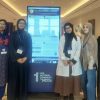
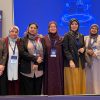
Critically, the research was conducted in close partnership with a team of undergraduate pharmacy students from DMU’s College of Pharmacy:
Afnan Shebl Hamad, Khadeeja Abdulwahhab Dawood, Abir Mohamad Al Jazar, Nouran Saad Ahmed, and Menna Mohamed.
Self-medication — the use of medicines without direct medical supervision — is a common global practice that carries significant public health risks, including misdiagnosis, incorrect dosing, adverse drug reactions, and antimicrobial resistance. Despite its prevalence, evidence from the UAE on this topic had remained limited.
This community-based, cross-sectional study surveyed 400 adults across multiple UAE emirates using structured, face-to-face questionnaires, followed by a targeted educational intervention in the form of a medication safety brochure. Post-intervention feedback was then collected to evaluate changes in awareness and attitudes.
The study revealed that self-medication is highly prevalent in the UAE, with 78% of participants reporting its use within the past 12 months. Key findings include:
This research highlights the critical role that pharmacists, academic institutions, and public health authorities must play in promoting safe and responsible medication use. The study calls for stronger pharmacist counselling, stricter enforcement of pharmaceutical regulations — particularly around antibiotic dispensing — and the integration of targeted educational tools into community pharmacy workflows.
The publication represents a meaningful example of student-faculty collaborative research at DMU, translating classroom learning into real-world impact.
Full article available at: https://doi.org/10.1080/20523211.2025.2600782
DOI: 10.1080/20523211.2025.2600782 | Journal of Pharmaceutical Policy and Practice, 2025

© DMU - Dubai, United Arab Emirates