
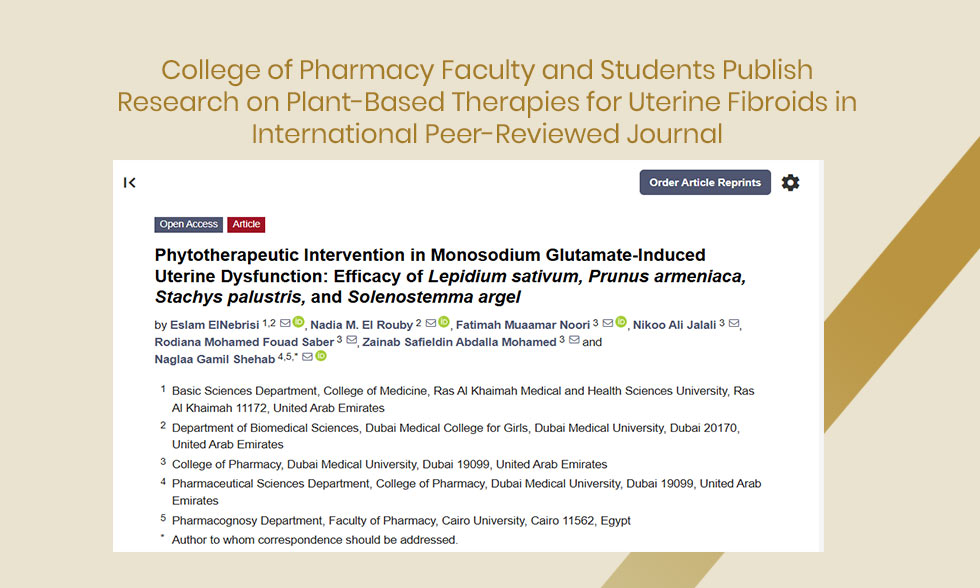
The College of Pharmacy at Dubai Medical University (DMU) announces the publication of a research article by Professor Naglaa Gamil Shehab, Professor in the Pharmaceutical Sciences Department – Dubai Medical University, in collaboration with undergraduate pharmacy students. The study was published in Pharmaceuticals (MDPI), a reputable international peer-reviewed journal, on March 23, 2026.
Titled “Phytotherapeutic Intervention in Monosodium Glutamate-Induced Uterine Dysfunction: Efficacy of Lepidium sativum, Prunus armeniaca, Stachys palustris, and Solenostemma argel,” the research investigates the therapeutic potential of four medicinal plant extracts in addressing uterine fibroids — a condition that affects an estimated 70–80% of women worldwide by the age of 50 and is a leading cause of hysterectomy.
Uterine fibroids are benign tumors that significantly impact women’s reproductive health, quality of life, and fertility. Current treatment options — including hormonal therapies and surgical interventions — are often limited by high costs, side effects, and concerns about fertility preservation. This study sought to explore plant-based, cost-effective, and minimally invasive alternatives.
Using a preclinical rat model, the research team evaluated four medicinal plant extracts — Lepidium sativum (garden cress), Prunus armeniaca (apricot), Stachys palustris (marsh woundwort), and Solenostemma argel (argel) — for their antioxidant activity, hormonal modulation, and protective effects on uterine tissue. The plants were selected based on their ethnopharmacological significance in Middle Eastern, North African, and European traditional medicine, as well as emerging scientific evidence supporting their roles in reproductive health.
Key findings of the study showed that Lepidium sativum and Stachys palustris demonstrated the most significant therapeutic effects, restoring antioxidant enzyme levels (catalase, glutathione, and superoxide dismutase), reducing estrogen receptor expression, and reversing fibroid-like structural changes in uterine tissue. Solenostemma argel and Prunus armeniaca also showed promising effects through distinct antioxidant and hormonal mechanisms.
The study was co-authored by pharmacy students Fatimah Muaamar Noori, Nikoo Ali Jalali, Rodiana Mohamed Fouad Saber, and Zainab Safieldin Abdalla Mohamed — reflecting the College of Pharmacy’s dedication to nurturing the next generation of pharmaceutical scientists through hands-on research experience.
The study provides important preclinical evidence supporting the use of select plant extracts in managing fibroid-associated oxidative stress and hormonal imbalance. The authors call for further clinical research to validate these findings and translate them into effective, evidence-based therapies for women’s health.
Full article (open access): https://www.mdpi.com/1424-8247/19/3/521 DOI: 10.3390/ph19030521

© DMU - Dubai, United Arab Emirates