
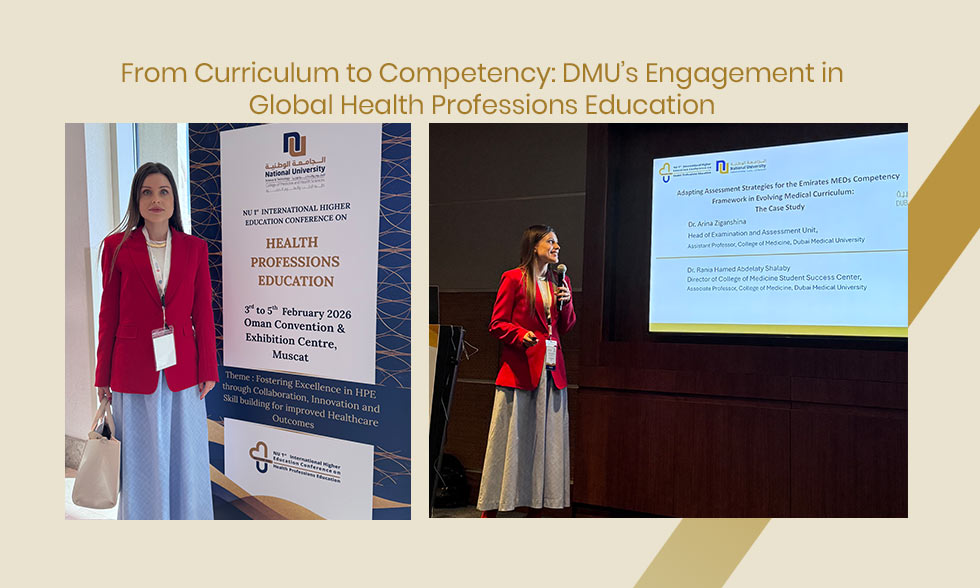
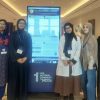
On February 4–5, Dr. Arina Ziganshina represented the College of Medicine (COM), Dubai Medical University, at the First International Higher Education Conference on Health Professions Education held in Muscat, Oman.
Dr. Arina had the privilege of chairing an oral presentation session within the Technology-Assisted Learning and Assessment track. The session featured presentations on a range of innovative topics, including the use of artificial intelligence in teaching and assessment, learning anatomy through digital anatomical models, simulation-based pharmacology training activities, and research on the impact of virtual reality on physician competency development.
In addition, Dr. Arina presented COM’s journey in adapting assessment strategies to evaluate EmiratesMEDs competencies within an evolving medical curriculum. Her presentation was delivered in the Assessment track, chaired by internationally renowned Professor John Norcini. Many presentations within this track focused on experiences in evaluating Entrustable Professional Activities (EPAs) in postgraduate programs. A consensus emerged among session participants on the value of frequent testing for learning, even when used solely for formative purposes. Professor Norcini emphasized that the most effective approach is the establishment of a holistic assessment system, ensuring coherence across courses and academic years and avoiding gaps in competency assessment.
The conference plenary sessions delivered powerful messages to educators from the MENA region, highlighting that the primary mission of health professions education is to improve patient outcomes. To achieve this goal, universities must actively engage stakeholders and industry partners in educational design and delivery, integrate community engagement and interprofessional learning activities into curricula, and contribute to creating supportive workplace environments for healthcare professionals.
Extensive discussions addressed the role of artificial intelligence in education and clinical practice, particularly its potential to support professors and physicians in their professional tasks. However, educational psychologist Professor Janet Grant cautioned policymakers about the potential deskilling effects of AI. She advocated for its cautious and justified use by both faculty and students to ensure the development of robust cognitive skills and clinical reasoning. Ultimately, health professionals must possess sufficient subject-matter expertise to critically evaluate information and identify AI-generated inaccuracies or hallucinations.
Dr. Arina sincerely thanks the Dubai Medical University leadership for their support and encouragement to participate in international educational conferences, enabling continuous learning and the sharing of the University’s experience on a global platform.


© DMU - Dubai, United Arab Emirates